August, 2025
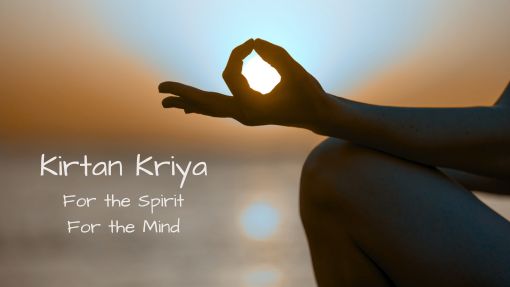
Mantras (repeated phrases) and mudras (hand positions) are not generally part of my meditation practices, but suddenly the time seems right to see if it fits.
Some years ago I was introduced to a practice called the Kirtan Kriya, which involves a coordinated series of hand movements and chants, sung aloud, then whispered, then repeated silently in cycles for 6 minutes, 12 minutes, or even more. It didn’t take then, but it has come back around for me recently and this time it seems to be sticking.
When I first heard about it, the benefits were described the same way meditation benefits usually are, but this time I heard something different. It’s not new, but it was new to me. Now, publications like Psychology Today and the Alzheimer’s Research and Prevention Foundation are recommending regular practice as a means of lowering the likelihood of experiencing Alzheimers, and perhaps even slowing the progress.
It is not uncommon for people of faith(s) or wonder if forms of meditation conflict with their beliefs, so I’d just like to emphasize that the syllables that are chanted are not prayers to a deity. They come from a longer phrase, Sat Nam, which means Truth is My Identity, and is central to the practice of Kundalini Yoga.
Here’s what each word, derived from Sanskrit, signifies:
Sa: Infinity, or the beginning
Ta: Life and existence
Na: Death or transformation
Ma: Rebirth and regeneration
There are many resources and descriptions if you are intrigued. The Alzheimers Foundation offers this guidance for a 12 minute practice but as the Mediocre Meditator, I keep it even simpler. Some sources recommend a 15 minute daily practice, but I’m starting with 6 to see if I can stay consistent. If you’d like to try it out, here is a , here is a You Tube version you can use to sing, and whisper, and silently repeat along.

April, 2025
I’ve always been as drawn to a full moon as the next person, but following the cycles of nature just hasn’t come “naturally” to me.
So this month, the only reason I knew there was a think called the Pink Moon or Strawberry Moon was that a local spa was using it as the theme for a special meditation event. (More on that another time)
Whether you celebrate it at a fancy spa, or at home in your jammies, one school of spiritual thought says this moon celebrates the arrival of spring and it’s new beginnings and renewals. To welcome and make room for those new beginnings, it’s also the time to soften, to let go, to release whatever has hardened inside you or is difficult to forgive. I have some work to do, how about you?

March, 2025
Teachers of meditation have all kinds of suggestions for how to calm the monkey mind.
Some use a mantra
Some use the breath
Some suggest focusing on a sound
Recently, during a stay in Palm Springs, I was able to create my own little floating meditation practice. I would drop my rear end into a pool donut, close my eyes, and just listen to the sound of the running water for 30 minutes. Heaven.
Here’s a little ASMR for you to enjoy.

January, 2025
This month I went in search of awe. For me, awe opens a mental and emotional door to the state of mind, or mindlessness, I try to get to when I meditate. Since I was in Paris, there was no shortage of world famous, awe inspiring places to choose from, both sacred and secular. The Louvre, Notre Dame, Sainte-Chapelle, the Musee D’Orsay, even Chartres Cathedral a short train ride away.
And what did I find? I found that I don’t have the focus to find awe among massive entry lines, security checks and crowds that feel and behave more like a train station at rush hour than a museum. That was the Louvre for me, even early on a weekday morning in January, and I felt an immediate urge to leave.
Next up, Notre Dame. It felt important to see it again, and the work that has been done was remarkable. The shoulder to shoulder crowd taking selfies and other photos while mass was going on seemed to agree. Am I glad I went? Yes. Was it impressive? Yes. But and awesome experience, in that portal-opening, time disappearing kind of way? No, not for me.
Sainte-Chapelle has always been one of my favorites – you see it pictured here. The long wait out in the cold, heavily armed guards and intense security check notwithstanding, I felt a glimmer. Maybe it was the smaller crowd – the narrow, winding staircase to the second floor does moderate the traffic. There was a bit of the hush of the sacred that was missing for me in the first two stops.
And then things started looking up.
Chartres Cathedral was freezing cold and almost empty the day we visited. Though it was physically uncomfortable, without the lines and the guns and the crowds it was much more, well, awesome. My breath slowed, my mind quieted.
So did that mean that awe required the absence of other people?
Happily, not. Or at least not for me. The Musee D’Orsay was not without lines, not without security, not without crowds, but something about the very design of the place seemed to inspire better behavior, more attention to the moment, and just more space to have a personal experience.
Where is the lesson? Awe will find you, don’t give up the search.

December, 2024
This is the Duomo in Milan, Italy. Like so many world-renowned landmarks, it is awesome in detail and in scale.
Whether you aspire to prayer, contemplation, or meditation and whatever your spiritual tradition, spaces like this seem like they should be ideal places to get still.
But we humans can always find distraction more easily than stillness, can’t we? Even if you were there all alone, the visual senses are overwhelmed. But of course, you are never there alone, there are cameras clicking, there are whispered conversations and explanations in so many languages that you can’t understand but can’t entirely ignore either.
And yet, I always try to take a moment, or two, or five or ten to get quiet in places like this full of history and human artistry. Here’s what I found out this time – it’s way easier to make this work in November than in high-season summer. I mean, spiritual discipline can only take you so far.
